Technique and Interpretation
Stepping onto the stage with the Detroit Symphony Orchestra always reminds me of the essential duality of a great performance: Technique and Interpretation. These two elements are interdependent; to separate them is to leave the performance incomplete. Flawless technique without interpretation becomes a boring, mechanical exercise, while deep interpretation without the necessary technique is messy, chaotic, and error-ridden.
As the founder of Sound Financial Planning, I have come to the realization that true financial mastery is built upon the same dynamic duality that governs all great art: the inevitable tension and desired harmony between technique and interpretation.
Finance is often mistakenly regarded as a rigid, purely technical discipline. It is seen as a cold, spreadsheet-driven exercise focused on quantitative metrics: the precision of a budget, the optimal percentage in an asset allocation model, or the intricate optimization of tax codes. This intense focus, while undeniably necessary, addresses only the technique of money management—the mechanical skill set.

Interpretation, on the other hand, represents the soul of a financial plan. It is the infusion of one's deepest life goals, core values, personal desires for impact, and artistic and creative dreams into your plan. Technique dictates how you execute your plan while interpretation answers the far more important question of why you are doing it at all.
The Foundation: The Janos Starker Approach to Technique
The great Hungarian cellist once wrote: “The goal of technique is to provide the artist with the freedom to express himself without being hindered by physical limitations.” This observation speaks to the unseen labor that underpins all mastery.

In the world of personal finance, we find a direct parallel: technique is the indispensable and often unseen structure that ensures your financial life functions reliably and efficiently. This technical foundation is comprised of core disciplines (akin to scales and arpeggios) that manage your resources, mitigate risk, and build long-term wealth:
Budgeting and Cash Flow: The discipline of understanding exactly where every dollar originates and where it is directed.
Saving: The consistent commitment of capital for future needs, transforming desire into execution through planned habit.
Investing: The mechanical, long-term strategy for capital growth, employing a disciplined approach to weather market volatility.
Tax Planning: The proactive, year-round effort to legally minimize tax liabilities, maximizing the amount of your earnings that remains in your pocket.
Insurance Planning: The critical strategy for risk mitigation, ensuring that catastrophic events—a sudden illness, a liability claim, or premature death—do not destroy years of disciplined financial progress.
Retirement: The systematic approach to building a self-sustaining pool of assets that will replace earned income when the working years conclude.
Estate Planning: The thoughtful, legally-binding structure that dictates the stewardship of your assets and legacy, ensuring your wishes are honored without undue cost or complexity.
If this technical foundation is weak, fragmented, or neglected, you will be perpetually “hindered by physical limitations”, as Starker put it. Your financial life becomes a series of reactive emergencies, a state of being at the mercy of your immediate circumstances rather than standing firmly on the bedrock of your preparation. You will spend precious mental energy worrying about bills, chasing opportunities, or fearing the next market downturn.
By contrast, the work of perfecting this financial technique—by budgeting, automating savings, structuring investments, reviewing insurance, and establishing clear legal frameworks—allows you to achieve a state of financial liberty. You can then move beyond the mechanics to focus on the true artistry of interpretation.
The Vision: The Rostropovich Approach to Interpretation
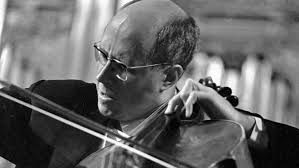
Mstislav Rostropovich said that a musician “must be able to see the entire horizon of the piece, not just the ground beneath his feet.” This statement is the quintessential definition of a great interpretation—one that is guided by an expansive vision rather than a preoccupation with the next immediate note.
This philosophy holds a powerful parallel in the realm of personal finance and life planning. A truly meaningful financial plan cannot be a simple checklist of transactions and account balances; it must be a reflection of your unique vision for your career, your family, and your life. It is this overarching vision that provides the vital context for every decision. If the technique of finance is the arithmetic; the interpretation is the purpose.
What brings you joy? Beyond consumption, what experiences, relationships, and contributions truly enrich your life and define your sense of fulfillment? How can your financial architecture be designed to maximize these sources of joy?
What is your definition of freedom? Is it geographical independence, the ability to walk away from a job, the power to pursue a creative passion, or simply the absence of worry? This specific definition will fundamentally shape the structure of your savings and investment strategies.
What is the narrative arc of your career? Is it a steady ascent, a planned pivot to a non-profit, an early exit to entrepreneurial pursuits, or a graceful transition into a second act? Understanding the story of your working life informs decisions about risk, human capital, and when to transition from accumulation to distribution.
Where do you see yourself 5, 10, 20, 30 years from now? These milestones are not arbitrary; they represent distinct phases of life—the prime accumulation years, the mid-career shift, the pre-retirement countdown, and the legacy years. Each phase requires a different financial posture, and looking across this entire timeline is essential to avoid optimizing for a small segment at the expense of the whole.
A truly sound and enduring financial life is infinitely more than a technical exercise; it is an art form, a profound and creative endeavor. Financial mastery, similar to that of artistic mastery, is successfully achieved only when one blends the required technique with a vital, deeply personal interpretation.

Comments